
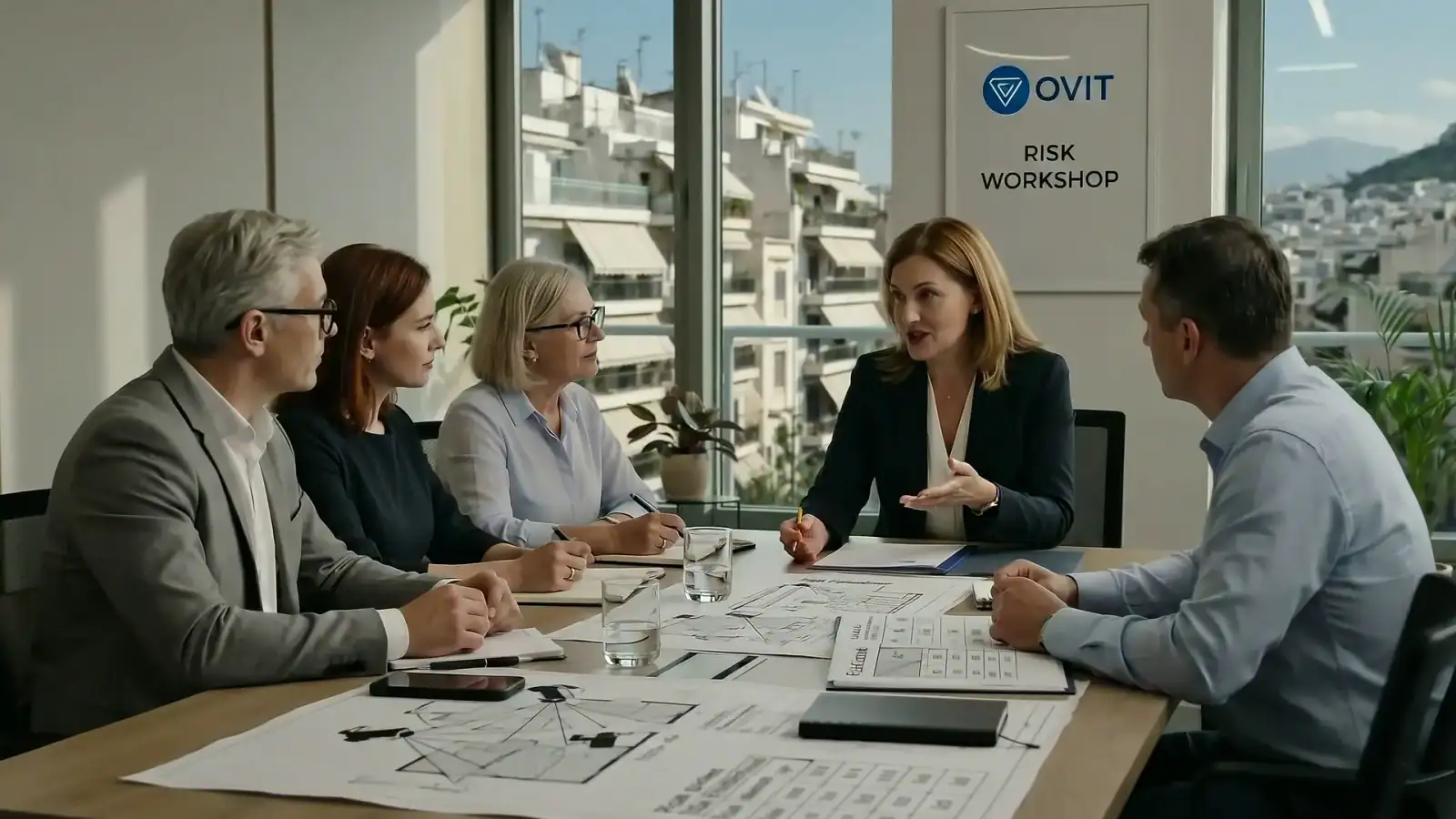
Independent advisory.
Independent risk assessments, security engineering, and operational auditing for high-value European assets.
Empirical proof.
Independent findings, evidenced and prioritised, ready for the board and the insurer.
Owner outcome
Security spend becomes targeted protection, backed by empirical data and regulatory compliance.
From risk assessment to proven resilience.
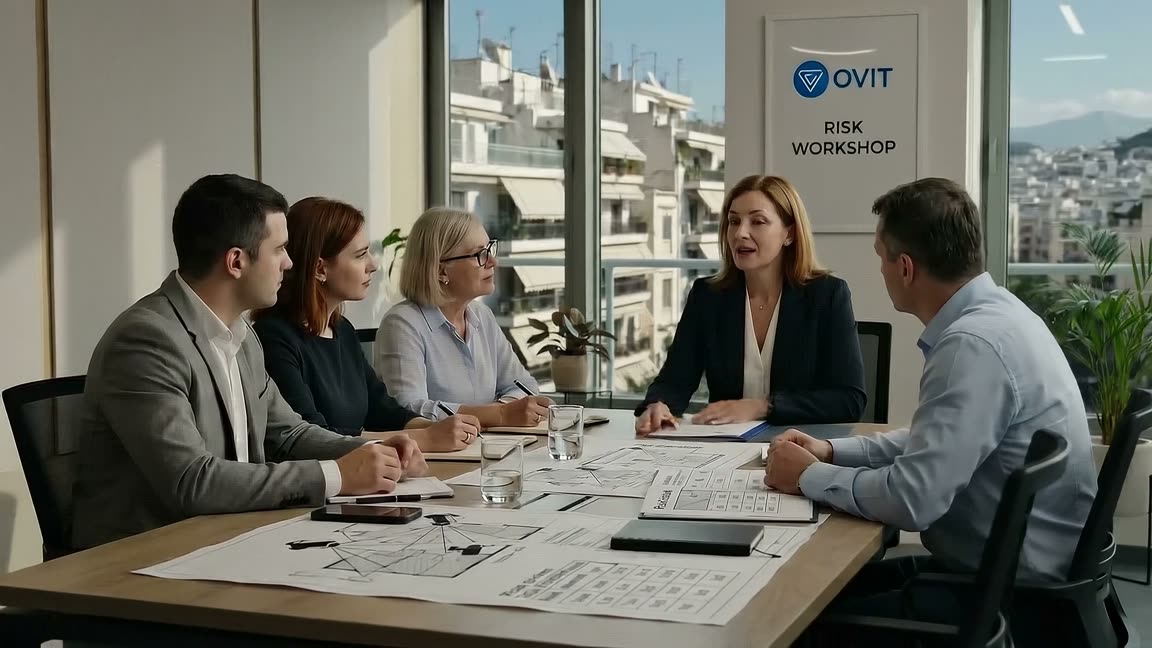
We evaluate physical security, digital integration, and guard operations to build an evidence-backed master security plan.
Unbiased engineering and strategy.
Each capability pairs expert advisory with measurable implementation standards. Select a chapter to explore.

Tabletop to site floor
Defensible frameworks for complex assets.
Security planning is useless if it exists only in binder form. We translate risk models into concrete operational protocols that site managers can execute and auditors can verify.
Security spend becomes targeted protection, backed by empirical data and regulatory compliance.
Risk governance and compliance intelligence.
Gap analysis, engineering specs, and compliance benchmarks unified in one collaborative workspace.

Risk Governance Workspace
Operational audit
Live workspace
Risk Matrix
CNS-3021 · 10:15
Discovery phase
Audit physical and operational controls.
On-site inspection mapping asset exposure, guard deployment, and technical gaps.
Risk scope
Full perimeter and operational evaluation.
Risk assessment in Skopje.
Gap analysis
Operational audit
06 · Specialized Risk Modules
10 Tailored Facility Risk Assessment Engines.
Each facility type operates under distinct regulatory pressures, threat profiles, and physical vulnerabilities. OVIT's Risk Platform deploys over 50 specialized questionnaires and standards-compliant audit protocols.
Logistics & Mail Hubs
Perimeter fencing, CBRN mail screening, anti-tunneling barriers, dock leveller controls, and TAPA TSR freight compliance.
Pharma Plants
Cleanroom biosecurity access, chemical precursor tracking, cold-chain temperature telemetry, and FDA audit readiness.
Retail Stores
EAS pedestals, high-value asset lockups, shoplifting de-escalation protocols, and cash office security audits.
Shopping Malls
Multi-entrance perimeter monitoring, panic alarm systems, parking deck CCTV coverage, and emergency evacuation egress.
Chemical Plants
SEVESO III major accident hazards, process safety HAZOP studies, toxic release barriers, and QRA scenario modeling.
Corporate HQs
Multi-tenant HRIS badge provisioning, executive suite protection, server room physical access, and visitor vetting.
Construction Worksites
Autonomous solar CCTV towers with thermal AI, biometric CSCS turnstiles, heavy machinery GPS tags, and fence alarms.
Industrial Plants
FMEA failure mode analysis, light curtain machine guards, contractor evacuation muster points, and LPR gate barriers.
University Campuses
Campus-wide emergency mass notification, dorm biometric access, laboratory CBRN security, and library entry control.
Luxury Hotels & Resorts
Ambient concierge security, quiet guard rounds on VIP floors, gala & private event emergency operating procedures (EOP).
07 · International Methodologies & Standards
Empirical Quantitative Risk Scoring & Frameworks.
We eliminate subjective opinion from security strategy. Risk Priority Numbers (RPN = Severity × Occurrence × Detection) and ISO/NIST frameworks generate defensible, audit-ready data.
Risk Management Framework
Principles & guidelines for systematic risk identification, evaluation, treatment, and continuous monitoring.
Security Threat & Alarm Standard
European standard for physical security monitoring, threat level determination, and alarm receiving centers.
Risk Assessment Guide
NIST framework for threat source identification, vulnerability likelihood, and impact determination.
Hazard & Operability Study
Structured technical analysis identifying operational process deviations, causes, consequences, and safeguards.
Failure Mode & Effects Analysis
Quantitative evaluation calculating RPN (Risk Priority Number = Severity × Occurrence × Detection).
Visual Barrier Risk Analysis
Visual mapping connecting threats, central risk events, preventive barriers, and reactive control measures.
Quantitative Risk Assessment
Statistical probability calculation, scenario modeling, consequence analysis, and cost-benefit optimization.
Vulnerability Scoring System
Open scoring framework assessing attack vector, attack complexity, privileges, and confidentiality/integrity impact.
Mobilisation
Four phases.
Scope definition
Aligning assessment objectives, compliance benchmarks, and threat models.
Field inspection
On-site physical audits, red-teaming, and system telemetry analysis.
Strategy deliverable
Presentation of prioritized risk register, engineering specs, and budget roadmap.
Implementation oversight
Technical supervision during procurement, installation, and team training.
Empirical security decisions for asset owners.
Targeted protection backed by evidence and regulatory compliance.
Independent
Unbiased advice
360°
Risk audit
Compliant
EU standards
Defensible
Architecture
Guides for making the decision
All guides- Security risk assessment: how it’s doneA security risk assessment answers five questions in order: what we protect (assets), from what (threats), where we are exposed (vulnerabilities), how serious each scenario is (likelihood × impact on a qualitative matrix) and what we do about it (controls across people, procedures and technology).6 min read
- How to choose a security companyChoose a security company on three criteria, in this order: legal operation (operating licence, guards with work licences), supervision you can verify (who checks the guard and how you see it) and stable people with written reporting (who guards your site, who replaces them, what report you get).8 min read
- Which is the best security company? Criteria, not listsThere is no single “best security company” for everyone.6 min read
- KPIs to measure your security companyMeasure your security company on six indicators: post coverage, checkpoint completion, replacement time, incident response and reporting time, report completeness and staff turnover on your site.6 min read
- Auditing your security provider: how the client does itA client audits its security provider in six steps: unannounced site checks, checking the records against reality, checking licences (the company licence and each guard’s personal category A or B work licence under Law 2518/1997), training records, reviewing incident handling and a written audit report with follow-up.6 min read
- The legal framework of private security in GreecePrivate security in Greece is governed by Law 2518/1997: the company needs an operating licence from the Hellenic Police, every guard needs a personal work licence in category A or B, and both company and staff are under the supervision of the local police authorities.9 min read
Request a security consulting audit.
Speak with our principal security advisors to evaluate your facility perimeter, access controls, or regulatory compliance posture.
Ready to secure your physical infrastructure?
Connect with our security operations team in Europe.